The Origins of Galata Tower: Genoese Constantinople (1348)
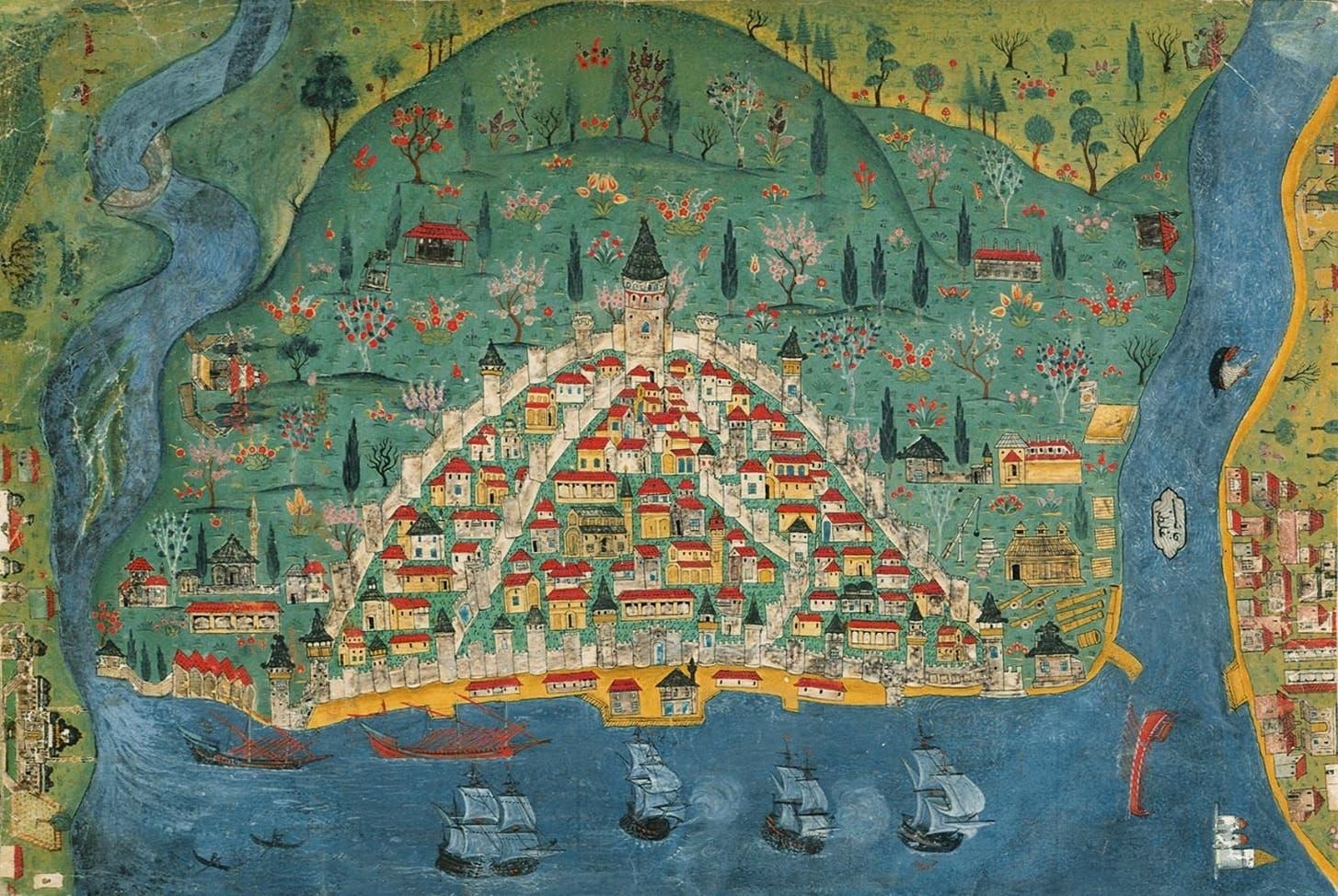
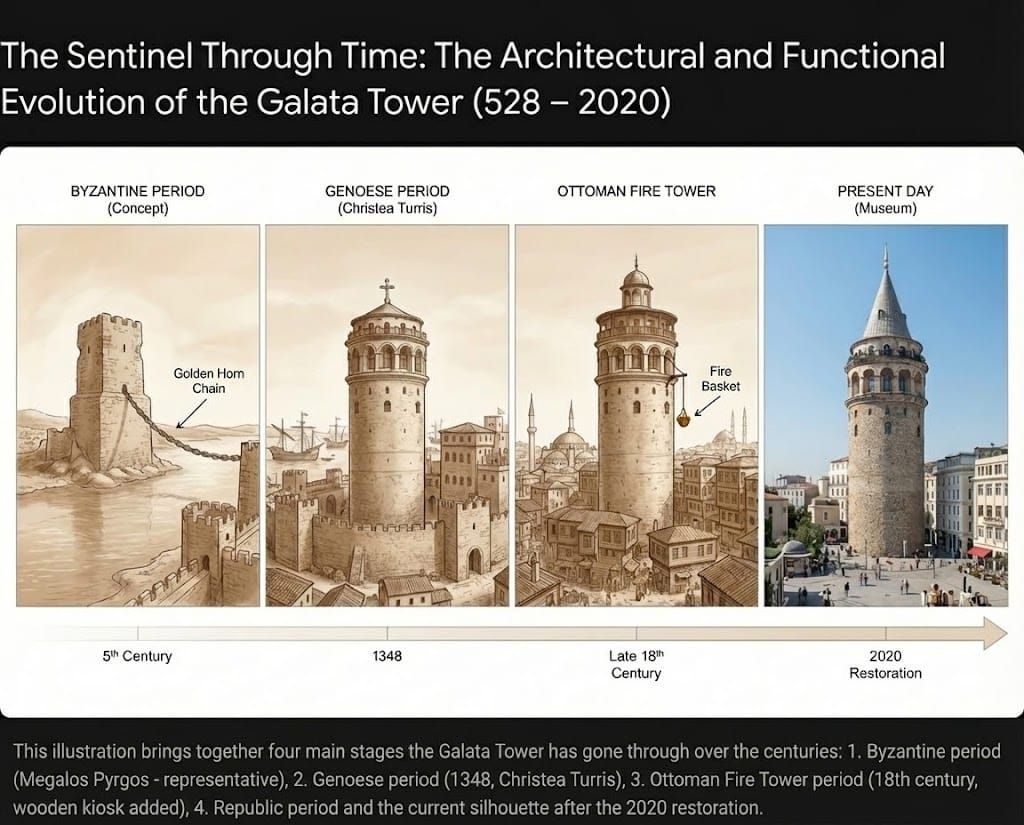
Galata Tower stands as one of the rare architectural witnesses to a period of Istanbul’s history that predates Ottoman rule. Built in 1348, the tower emerged during a time when Constantinople was still under Byzantine administration and the district of Galata functioned as a semi-autonomous Genoese trading colony.
Understanding the origins of Galata Tower requires stepping back into the political and economic realities of the medieval Mediterranean world.
Genoese Presence in Constantinople
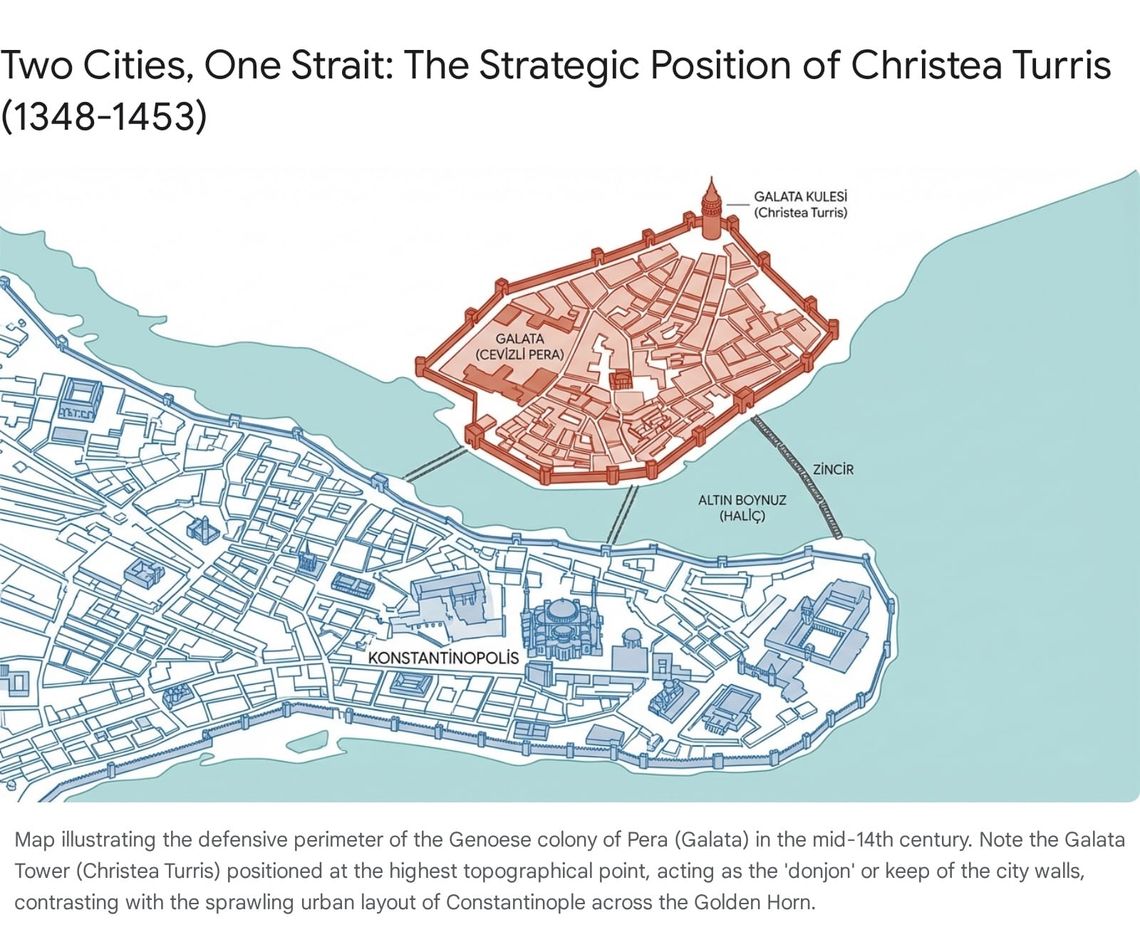
By the 13th and 14th centuries, the Republic of Genoa had established itself as one of the dominant maritime powers of Europe. Through a series of treaties with the Byzantine Empire, Genoese merchants were granted control over Galata, located directly across the Golden Horn from Constantinople.
Galata was not simply a neighborhood.
It was a fortified commercial enclave, complete with its own walls, administrative structures, and defense mechanisms.
Galata Tower was constructed as part of this defensive system.
The Tower of Christ (Christea Turris)
Historical sources refer to Galata Tower by its original name: Christea Turris, or the Tower of Christ. At the time of its construction, it was the tallest structure in Galata and one of the tallest towers in the region.
Its strategic functions included:
- Monitoring maritime traffic entering the Golden Horn
- Defending the Genoese settlement from both land and sea
- Serving as a visual symbol of Genoese authority and presence
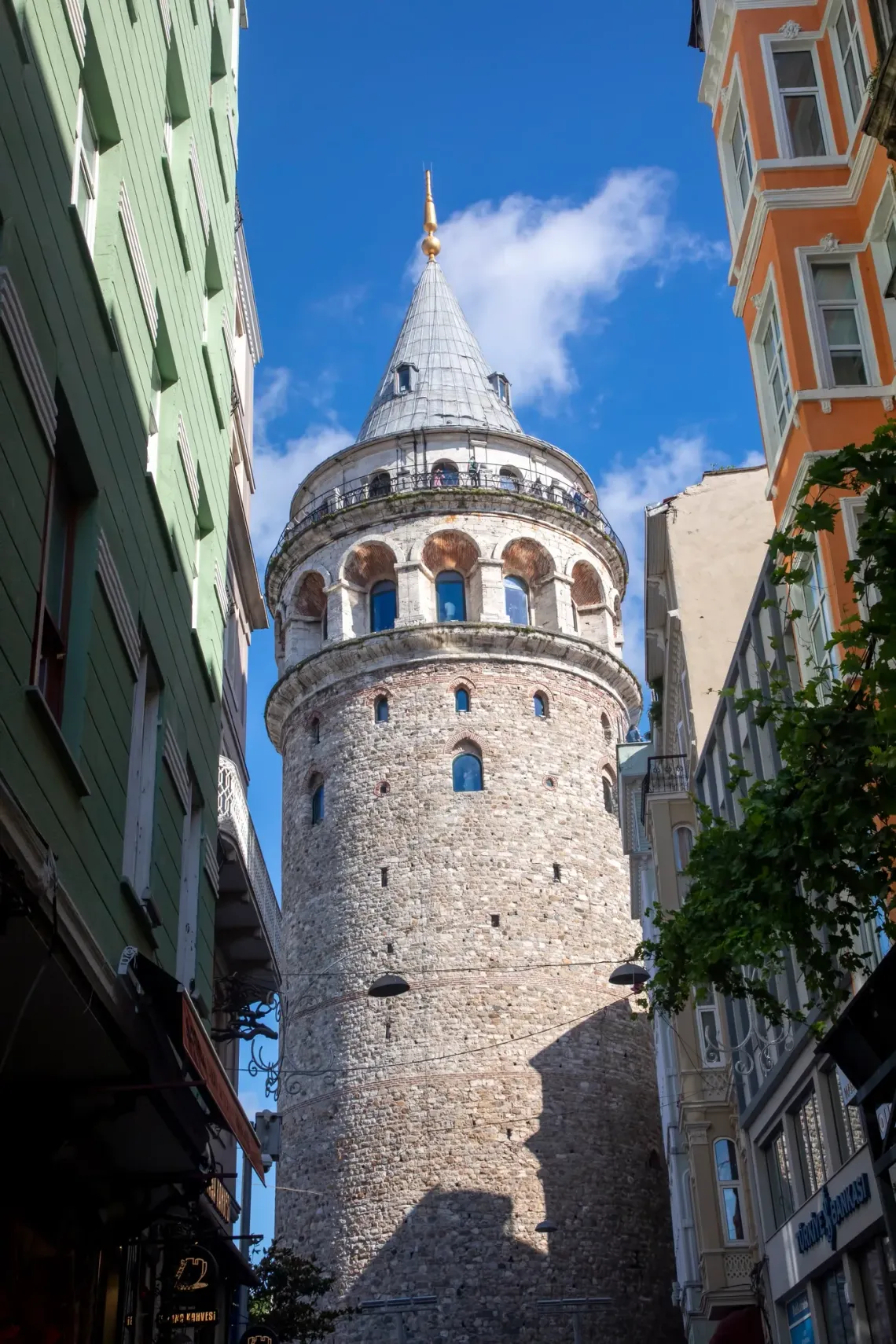
The tower’s height and cylindrical stone design were deliberate choices, aligning with medieval European military architecture rather than Byzantine or Islamic traditions.
Architectural Intent and Medieval Design
Unlike later Ottoman towers or minarets, Galata Tower reflects a Western European architectural logic.
Key design elements include:
- Thick stone masonry for structural durability
- Narrow windows optimized for observation and defense
- A circular form to minimize blind spots
These features allowed the tower to function as a surveillance point while also communicating power and permanence.
Even today, these medieval characteristics distinguish Galata Tower from the surrounding Ottoman-era skyline.
A City Within a City
Galata during the Genoese period operated almost as a city within a city. While Constantinople remained the imperial capital of Byzantium, Galata functioned as a commercial hub connecting Europe, Asia, and the Black Sea.
The construction of Galata Tower must be understood in this context:
- Trade required protection
- Wealth required fortification
- Visibility equaled control
The tower was not merely a structure; it was a statement.
Survival Beyond Empires
When the Ottomans conquered Constantinople in 1453, many structures were destroyed or replaced. Galata Tower survived.
Its continued use under Ottoman administration speaks to its strategic value. Rather than being dismantled, the tower was adapted, marking the beginning of its long transformation through successive eras.
This continuity is one of the reasons Galata Tower holds such a unique place in Istanbul’s architectural history.
Why the Genoese Origins Still Matter
The Genoese origins of Galata Tower explain why it feels different from other Istanbul landmarks.
It does not belong to a single civilization or empire.
It represents a layered urban history shaped by commerce, defense, and adaptation.
Recognizing Galata Tower’s medieval European roots allows modern visitors to understand Istanbul not as a city defined by one era, but as a crossroads where multiple worlds have intersected for centuries.
Internal References
- Ottoman Era Transformation → From Watchtower to Fire Tower
- Architectural Analysis → Medieval European Architecture in Istanbul
- Visitor Context → Visitor Information
Subscribe to newsletter
Subscribe to my newsletter to get the latest updates and news