History & Architecture of Galata Tower
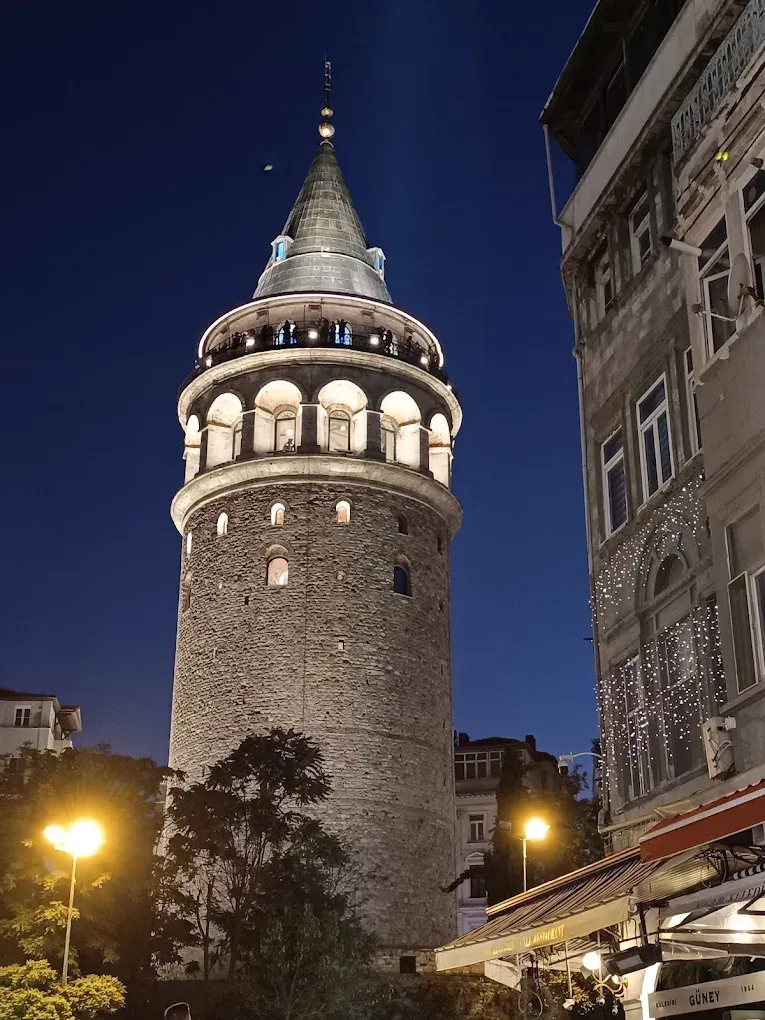
A Witness to Istanbul’s Changing Empires
Galata Tower is one of the few landmarks in Istanbul that predates the Ottoman Empire. Built in 1348, the tower has stood through dramatic political, cultural, and architectural transformations, making it a rare physical link between medieval Europe and the imperial city that followed.
Long before Istanbul became the capital of the Ottoman Empire, the area surrounding Galata Tower was part of a Genoese trading colony. At the time, Constantinople was under Byzantine rule, and foreign merchants were granted semi-autonomous zones for commerce and defense.
Galata Tower was constructed as part of the fortification system protecting the Genoese settlement and the vital maritime routes of the Golden Horn.
The Genoese Period: A Tower of Commerce and Defense
Originally known as the Tower of Christ (Christea Turris), Galata Tower was the tallest structure in the area when it was built. Its primary purpose was surveillance and defense.
From the top of the tower, guards could monitor:
- Incoming ships to the Golden Horn
- Trade routes connecting Europe and Asia
- Potential threats approaching the city walls
The circular stone structure, thick masonry, and elevated position were deliberate architectural choices designed to maximize durability and visibility.
Even today, the tower’s proportions reflect medieval European military architecture, clearly distinguishing it from later Ottoman design traditions.
The Ottoman Era: Fire, Observation, and Transformation
After the Ottoman conquest of Constantinople in 1453, Galata Tower remained standing and was gradually integrated into the city’s new administrative and urban system.
During the Ottoman period, Istanbul was largely built from wood, making fires a constant and devastating threat. Galata Tower was repurposed as a fire watchtower, playing a crucial role in the early warning system that protected the city.
From its summit, watchmen could spot smoke rising from neighborhoods across Istanbul and signal the danger using flags, lanterns, or sound-based alerts.
The tower also served other roles during this period, including:
- A prison for certain categories of detainees
- An observation point for city planning and navigation
- A landmark for maritime orientation
Rather than being replaced, Galata Tower adapted — a testament to its strategic importance.
Legends and the Spirit of Innovation
One of the most enduring stories associated with Galata Tower is the legend of Hezarfen Ahmed Çelebi, an Ottoman scholar and inventor.
According to historical accounts and folklore, Hezarfen is said to have launched himself from the top of Galata Tower using artificial wings and flown across the Bosphorus to Üsküdar in the 17th century.
Whether interpreted as fact, exaggeration, or myth, the story reflects something deeply rooted in Istanbul’s identity: curiosity, ambition, and the courage to challenge limitations.
Galata Tower, in this sense, became a symbol not just of surveillance, but of imagination.
Architectural Features and Structural Design
Galata Tower’s architecture is both functional and symbolic.
Key architectural elements include:
- Cylindrical stone body designed for stability
- Conical roof, added during later restorations
- Narrow windows optimized for observation rather than light
- Thick masonry walls, some measuring several meters in depth
Unlike Ottoman minarets or domed structures, Galata Tower follows a distinctly European medieval style, making it architecturally unique within Istanbul’s skyline.
Its height and form allowed it to remain visually dominant despite centuries of urban expansion around it.
Restoration and Modern Era
Over the centuries, Galata Tower has suffered from earthquakes, fires, and structural wear. Each era left its mark, resulting in multiple restoration phases.
In the modern period, the tower was carefully restored and opened to the public as a cultural and historical monument. These restorations aimed to preserve the tower’s original character while making it accessible and safe for visitors.
Today, Galata Tower functions as:
- A historical monument
- A panoramic observation point
- A cultural symbol representing Istanbul’s layered past
Its role has shifted from defense to reflection — offering visitors a place to understand the city’s evolution from above.

A Structure That Connects Time and Place
What makes Galata Tower exceptional is not just its age or height, but its continuity.
Few structures in Istanbul have remained relevant across:
- Byzantine administration
- Genoese commerce
- Ottoman governance
- Modern urban life
Standing beneath Galata Tower, it becomes clear that this is not simply a monument frozen in time. It is a structure that has continuously adapted, reflecting the city’s ability to absorb change while preserving identity.
Galata Tower does not belong to one empire or one culture.
It belongs to Istanbul itself.