From Watchtower to Fire Tower: Galata Tower in the Ottoman Era
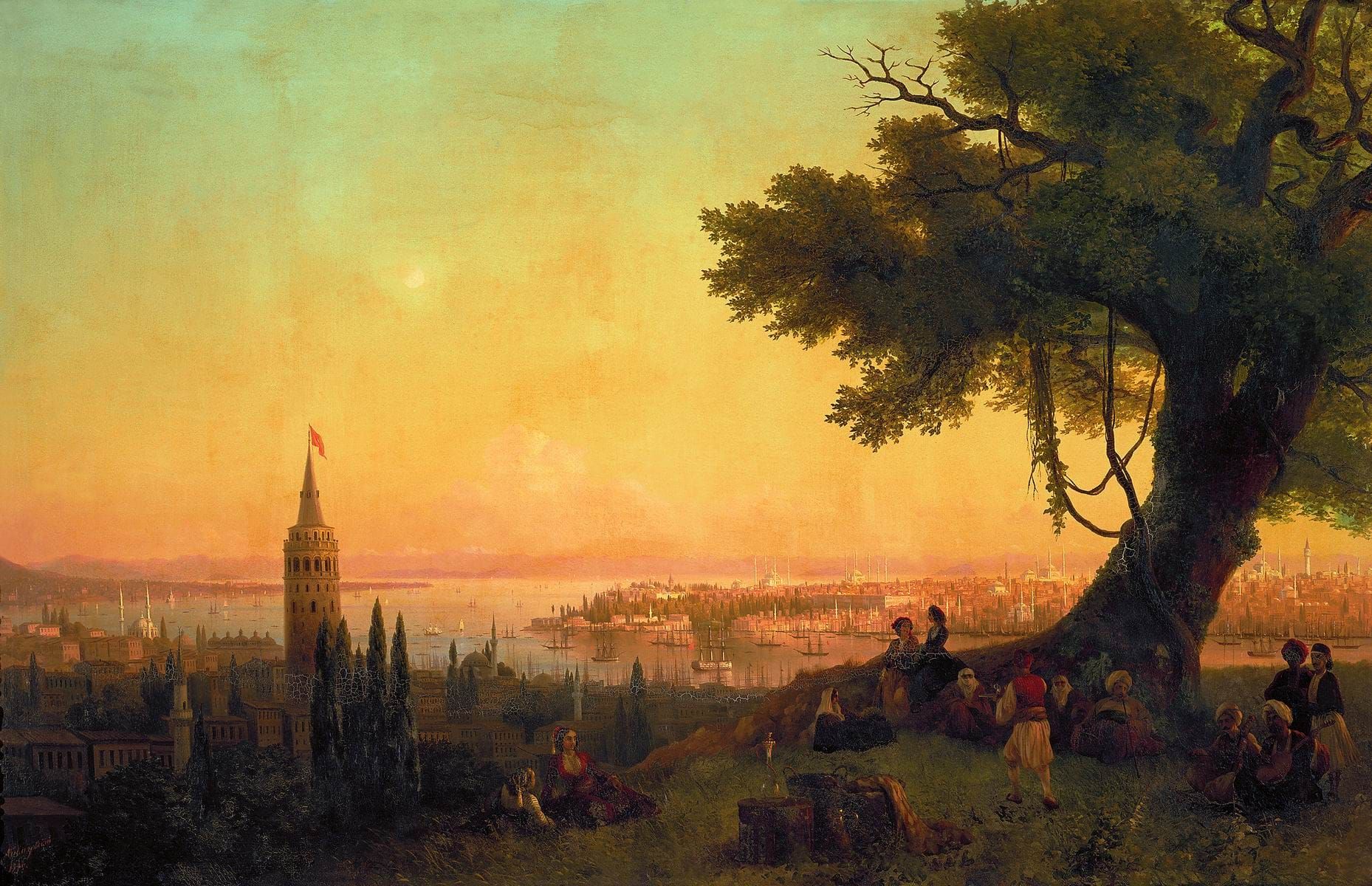
When the Ottoman Empire conquered Constantinople in 1453, the city entered a new political and cultural phase. Many structures were destroyed, rebuilt, or repurposed during this transformation. Galata Tower, however, followed a different path.
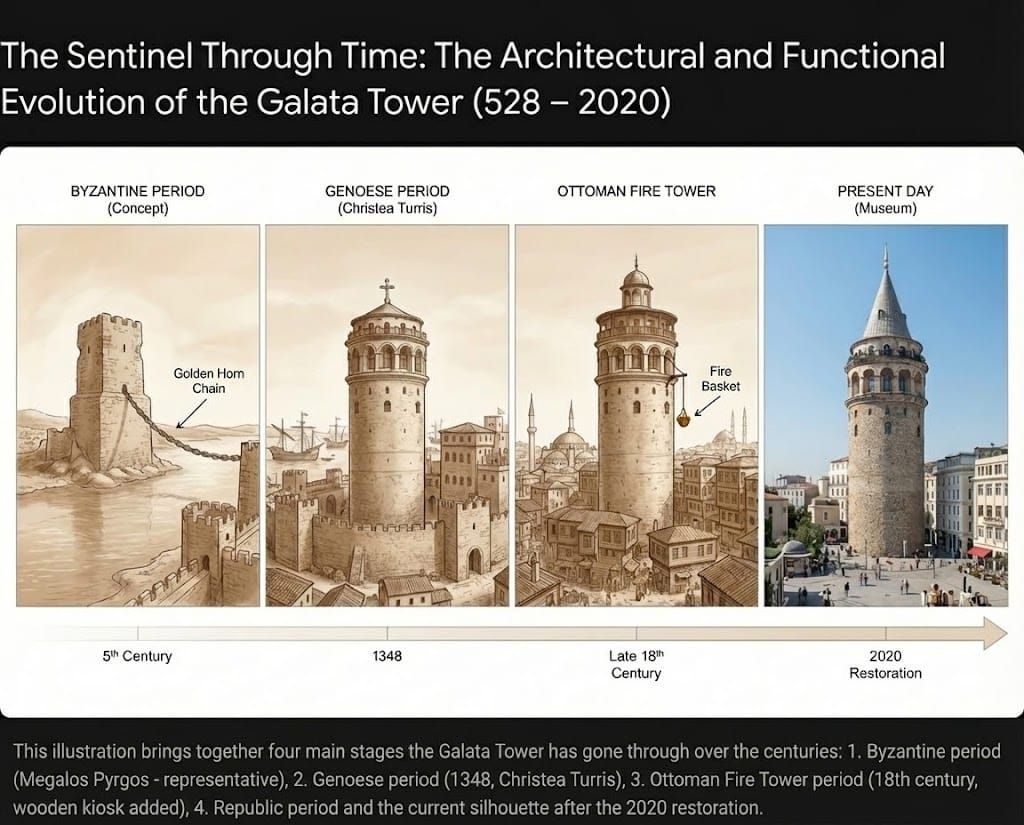
Rather than being dismantled, the tower was absorbed into the Ottoman urban system, gradually taking on new functions that reflected the needs of a rapidly growing imperial capital.
This continuity is central to understanding Galata Tower’s significance during the Ottoman era.
Galata After the Conquest
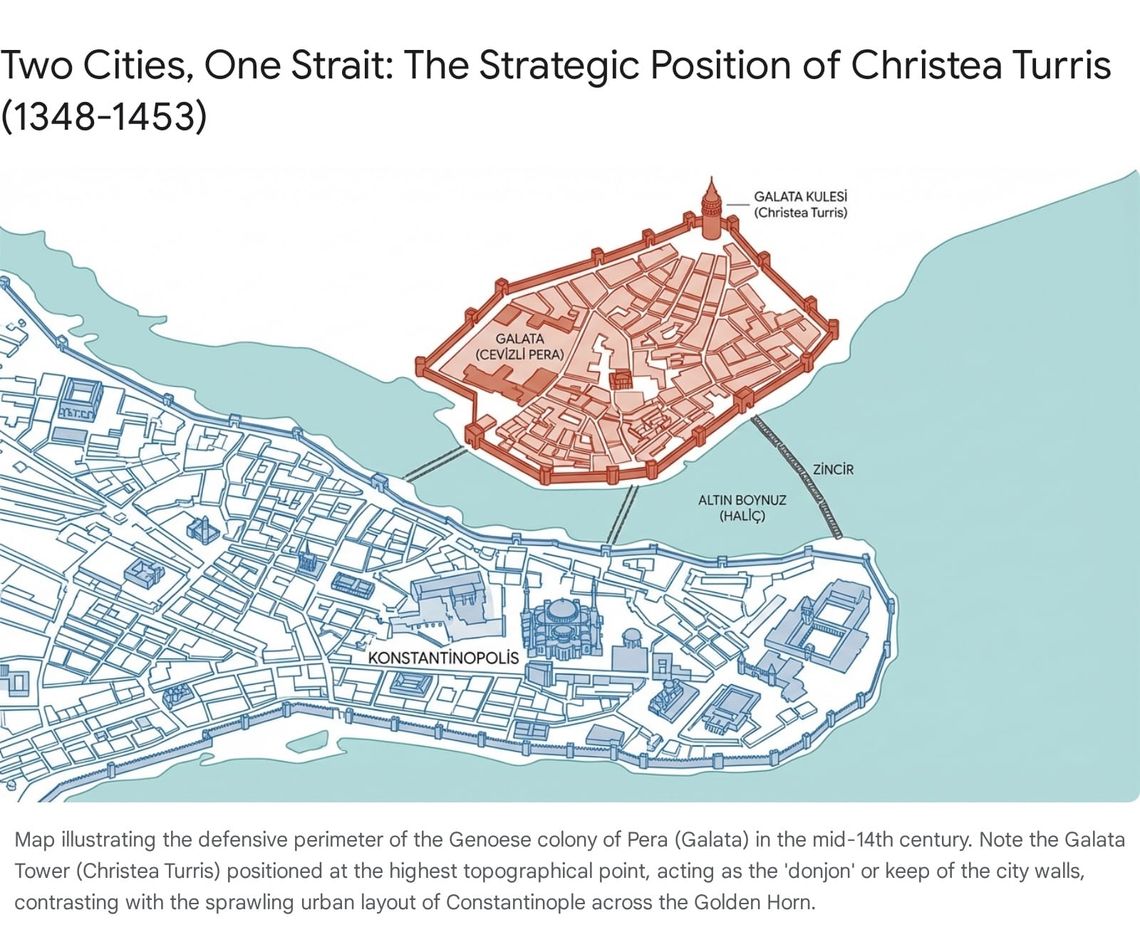
Following the conquest, Galata retained a degree of administrative and social distinction. The district remained an important commercial zone, populated by merchants, craftsmen, and maritime workers.
For the Ottoman administration, Galata Tower represented:
- A strategically located high point
- A pre-existing structure too valuable to remove
- A ready-made observation platform
The Ottomans did not view the tower as a foreign symbol to be erased, but as an asset to be adapted.
The Rise of Fire Watchtowers in Ottoman Istanbul
One of the most pressing challenges of Ottoman Istanbul was fire.
For centuries, the city’s residential architecture relied heavily on wood. Large-scale fires could destroy entire neighborhoods within hours. As a result, the Ottoman administration developed a network of fire watchtowers across the city.
Galata Tower became a critical element of this system.
From its elevated position, watchmen could:
- Detect smoke rising from distant quarters
- Identify the direction and scale of fires
- Signal alerts using visual or audible methods
This function transformed Galata Tower from a defensive structure into a tool of urban protection.
Daily Life Inside the Tower
During the Ottoman period, Galata Tower was not a public monument. It was a working structure, staffed by guards and watchmen responsible for monitoring the city.
Historical records suggest that:
- Access was restricted
- The tower operated according to strict routines
- Observation duties were coordinated with other towers
Rather than serving ceremonial purposes, the tower was embedded in the practical infrastructure of Istanbul.
Hezarfen Ahmed Çelebi: Between History and Legend
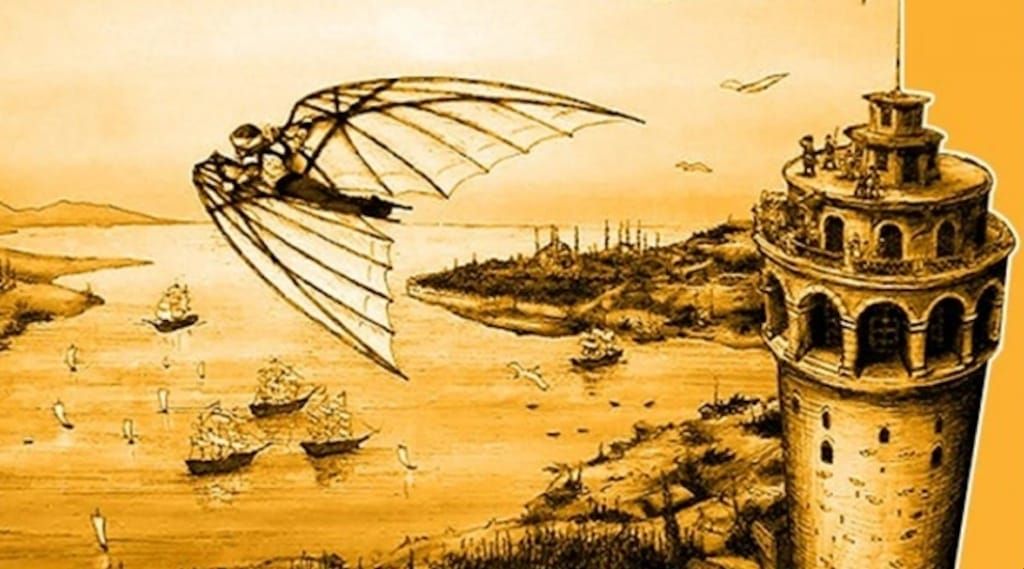
No discussion of Galata Tower in the Ottoman era is complete without addressing the story of Hezarfen Ahmed Çelebi.
According to the 17th-century Ottoman traveler Evliya Çelebi, Hezarfen is said to have conducted experiments in flight and ultimately launched himself from Galata Tower, crossing the Bosphorus to Üsküdar.
Modern historians approach this account with caution.
While the story may contain elements of exaggeration, it reflects:
- Ottoman-era interest in science and experimentation
- The symbolic association of Galata Tower with innovation
- Istanbul’s openness to unconventional ideas
Whether factual or not, the narrative became part of the tower’s cultural memory.
Structural Changes and Maintenance
Throughout the Ottoman period, Galata Tower underwent several repairs and modifications. Earthquakes, fires, and general wear required ongoing maintenance.
These interventions:
- Preserved the core medieval structure
- Added features suited to new functions
- Ensured the tower’s continued usability
Importantly, the Ottomans did not radically alter the tower’s original form. This restraint contributed to the survival of its Genoese architectural identity.
A Tower That Adapted, Not Replaced
What distinguishes Galata Tower during the Ottoman era is its adaptability.
Rather than being rebuilt according to Ottoman architectural norms, the tower was allowed to remain structurally and visually distinct. This coexistence of architectural traditions is rare in imperial capitals, where new regimes often impose uniform styles.
Galata Tower’s continued presence illustrates the Ottoman approach to urban pragmatism: preserving what works, while integrating it into a new system.
The Ottoman Legacy of Galata Tower
By the end of the Ottoman period, Galata Tower had become:
- A recognized city landmark
- A vital component of urban safety
- A symbol of continuity across regimes
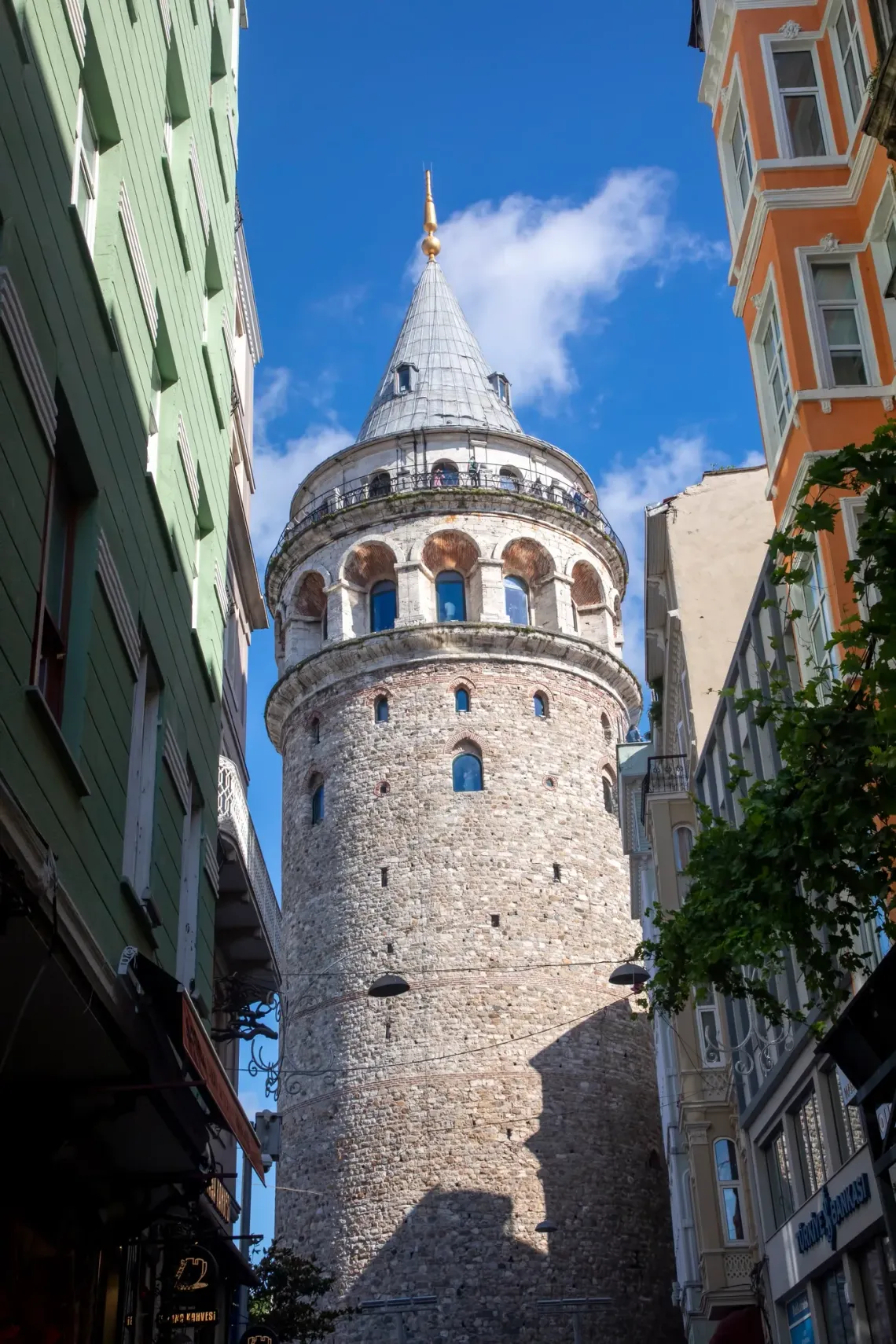
Its role during these centuries laid the groundwork for its modern identity — not as a relic of one empire, but as a structure shaped by many.
Why the Ottoman Era Matters Today
Understanding Galata Tower’s Ottoman phase explains why the tower feels neither exclusively European nor purely Ottoman.
It is the product of historical negotiation, adaptation, and coexistence.
For modern visitors, this layered past offers a deeper perspective: Galata Tower is not a monument frozen in time, but a structure that evolved alongside the city it overlooks.
Subscribe to newsletter
Subscribe to my newsletter to get the latest updates and news