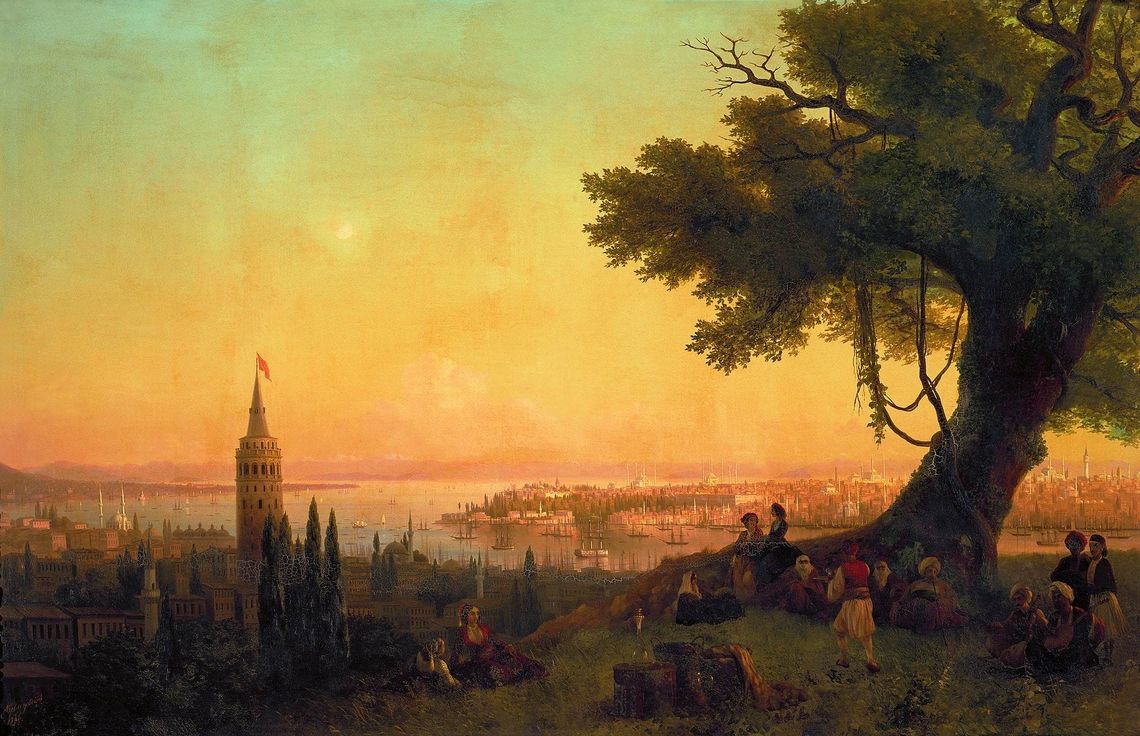
Fires, Earthquakes, and Restorations: How Galata Tower Survived the Centuries

Few structures in Istanbul have endured as many natural and human-made challenges as Galata Tower.
From medieval fires to powerful earthquakes, the tower’s current form is the result of repeated destruction, repair, and careful preservation.
Understanding these cycles of damage and restoration helps explain why Galata Tower looks the way it does today — and why it continues to stand.
Istanbul: A City Shaped by Fire
For much of its history, Istanbul was a city built primarily of wood. While this allowed for rapid construction, it also made large-scale fires frequent and devastating.
During the Ottoman era, fires could spread quickly through dense neighborhoods, destroying thousands of buildings in a single event. Galata Tower, surrounded by residential and commercial structures, was repeatedly exposed to these dangers.
Historical records indicate that the tower suffered damage from multiple fires, particularly those affecting its upper sections and roof.
Rather than abandoning the structure, authorities consistently chose to repair it — a clear sign of its strategic importance.
The Impact of Earthquakes
Istanbul lies near major fault lines, and earthquakes have played a significant role in shaping the city’s architecture.
Galata Tower experienced structural stress during several major seismic events, including:
- Earthquakes in the 16th and 18th centuries
- Later tremors affecting the wider Bosphorus region
These events caused cracks, roof collapses, and partial damage to the tower’s upper elements. However, the tower’s thick stone masonry and cylindrical form proved remarkably resilient.
Its design distributed seismic forces more evenly than many rectangular structures, contributing to its survival.
Ottoman-Era Repairs and Modifications
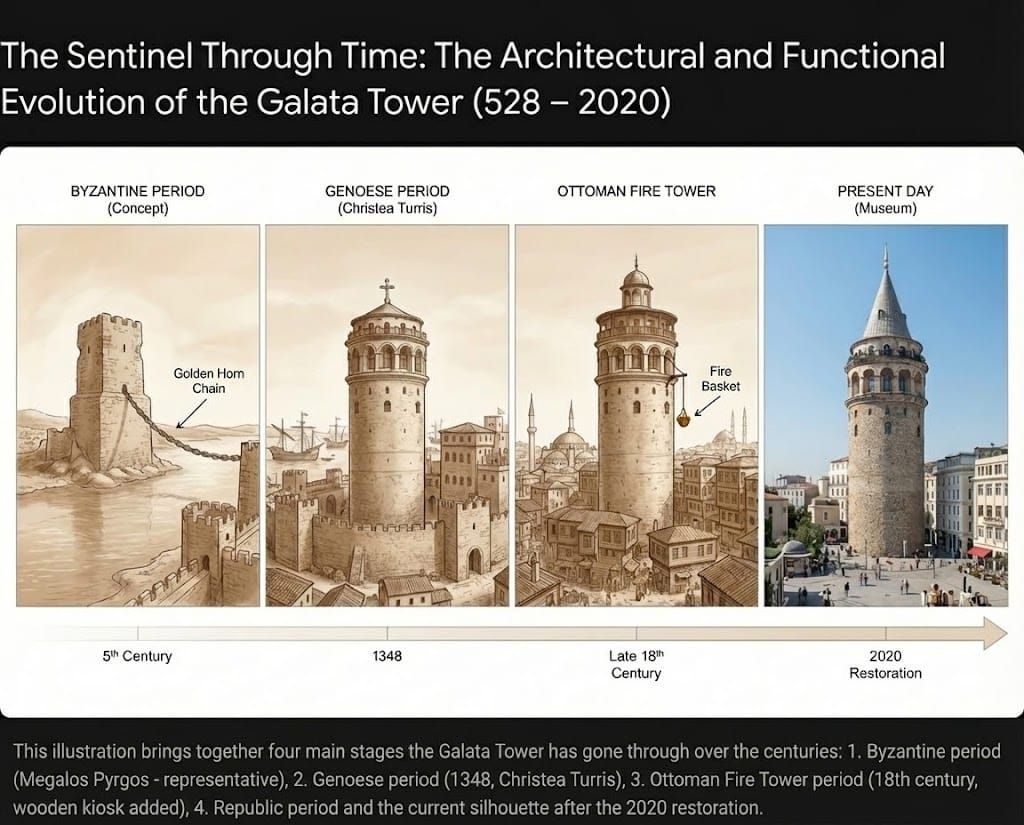
During the Ottoman period, restoration efforts focused on functionality rather than aesthetic transformation.
Repairs typically involved:
- Reinforcing damaged stonework
- Replacing wooden interior elements
- Modifying the roof to better withstand weather and fire
These interventions were pragmatic. The goal was to maintain the tower’s role as a fire watchtower and observation point, not to redesign it according to contemporary architectural trends.
As a result, the tower retained much of its medieval character.
The Conical Roof and Visual Identity
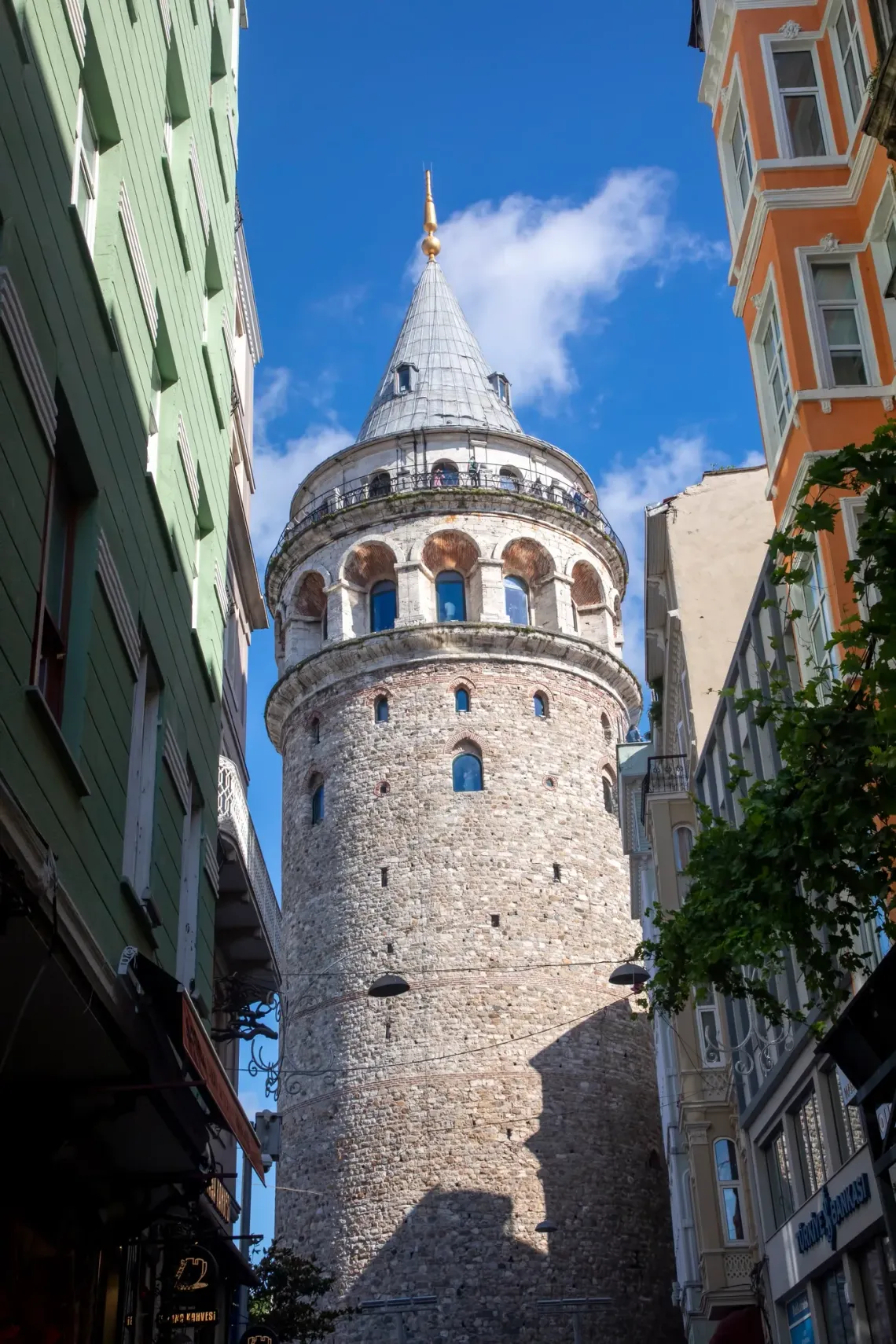
One of the most recognizable features of Galata Tower today is its conical roof.
This roof was not part of the original Genoese structure. It was added and reconstructed several times following fires and storms, particularly during the Ottoman and later periods.
The conical form served practical purposes:
- Improved water drainage
- Reduced fire risk compared to flat wooden roofs
- Enhanced visibility for watchmen
Over time, it became a defining visual element, shaping the tower’s iconic silhouette.
Modern Restorations and Conservation Principles
In the 19th and 20th centuries, restoration philosophy began to shift.
Rather than focusing solely on utility, conservation efforts aimed to:
- Preserve historical authenticity
- Stabilize the structure for public access
- Document earlier construction phases
Modern restorations were conducted with greater attention to historical accuracy, ensuring that repairs respected both Genoese and Ottoman layers of the tower’s past.
These efforts transformed Galata Tower from a working structure into a cultural and historical monument.
Why Galata Tower Endured
The survival of Galata Tower is not accidental.
Several factors contributed to its longevity:
- Strategic importance across multiple eras
- Robust medieval construction techniques
- Continuous maintenance rather than abandonment
- Adaptive reuse under changing regimes
Each restoration did more than repair damage — it extended the tower’s relevance.
A Structure Shaped by Time, Not Replaced by It
Unlike many historical buildings that were demolished and rebuilt, Galata Tower evolved.
Its present form reflects:
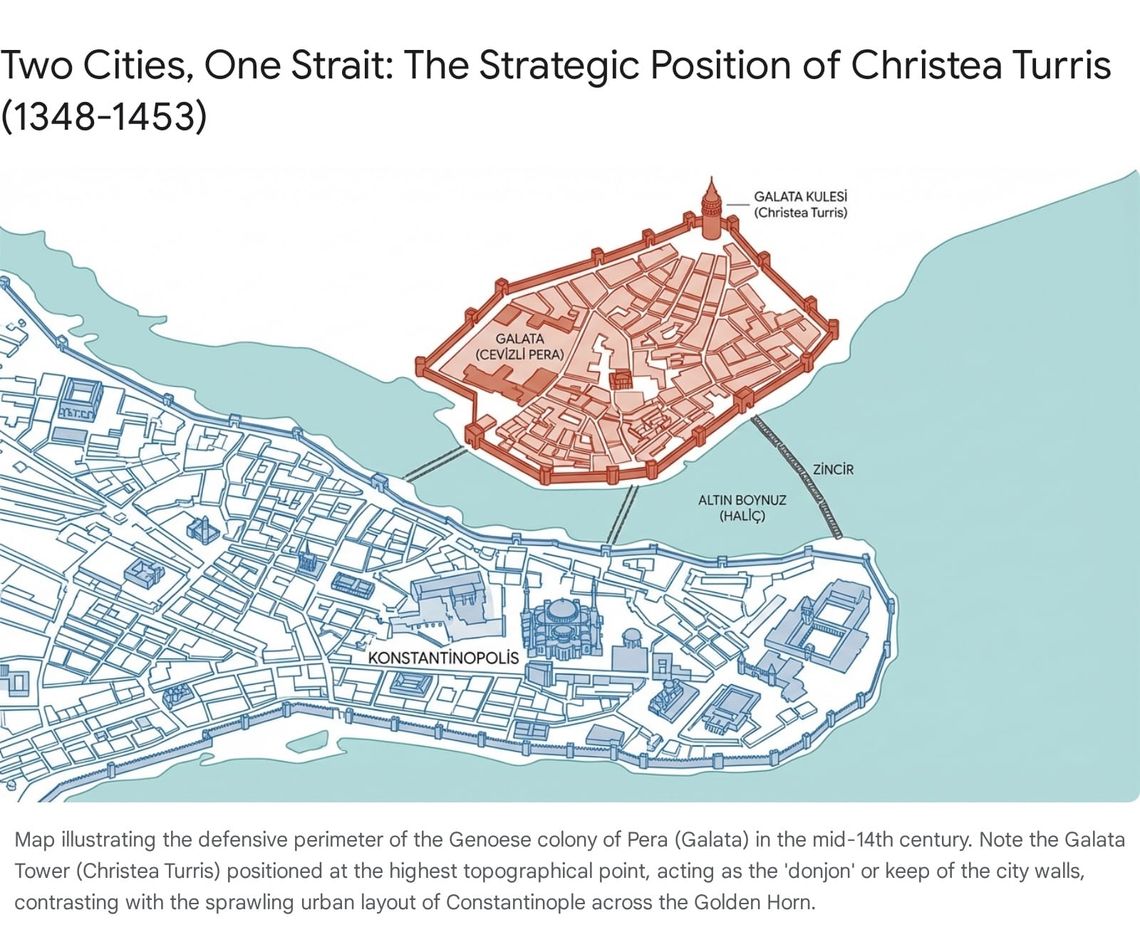
- Genoese foundations
- Ottoman adaptations
- Modern conservation standards
This layered physical history mirrors Istanbul’s broader urban story — one of continuity through change.
Why This History Matters to Visitors Today
For modern visitors, Galata Tower’s story is not just about endurance.
It offers insight into:
- How cities respond to disaster
- The balance between preservation and adaptation
- The value of maintaining historical structures within living urban environments
Standing beneath the tower, it becomes clear that what survives is not simply stone, but a long tradition of care and renewal.
Subscribe to newsletter
Subscribe to my newsletter to get the latest updates and news